
ECINS helps law enforcement and public safety partners work from one secure operational picture — connecting people, places, incidents, intelligence, referrals, actions, and outcomes across agencies.
Police departments, sheriff’s offices, courts, schools, behavioral health, probation, housing, fire/EMS, community organizations, and other authorized partners often work with the same high-risk individuals and locations. But when information sits in separate systems, warning signs are missed, repeat incidents escalate, and officers are left responding without the full picture.
ECINS gives agencies a secure multiagency platform to identify risk earlier, coordinate intervention faster, and reduce repeat demand before the next crisis, call for service, arrest, or custody event.
Modern public safety challenges rarely belong to one agency.
Repeat calls for service, behavioral health crises, school threats, domestic violence escalation, homelessness, substance misuse, reentry, probation, youth violence, and community disorder all cross agency lines.
But many communities still rely on disconnected systems, spreadsheets, manual referrals, email chains, and informal phone calls. That creates:
ECINS closes that gap by giving authorized agencies one secure environment to coordinate around shared risk.

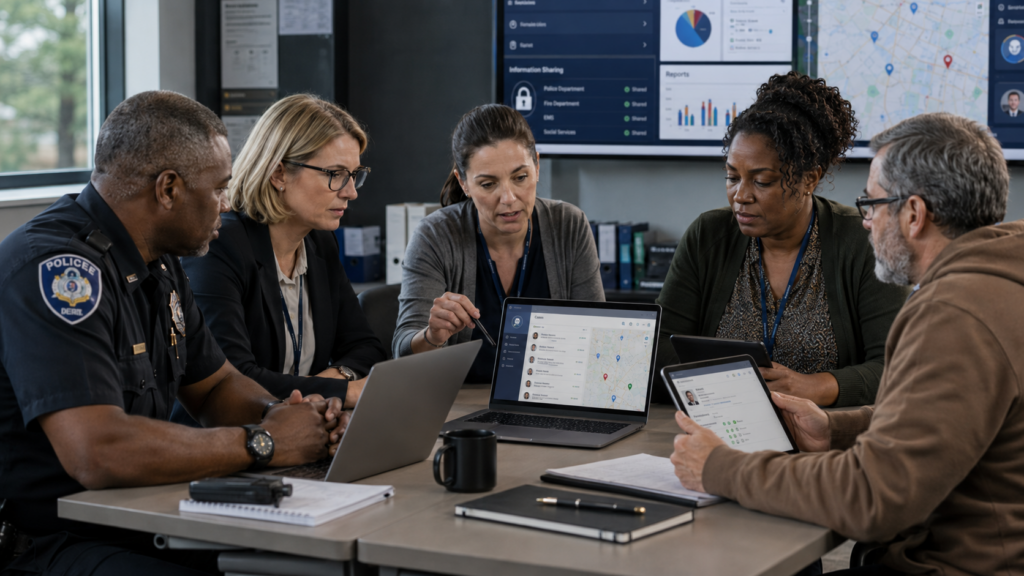
With ECINS, law enforcement and partners can:
This is not another siloed case management system. ECINS is the collaboration layer that helps agencies work the same public safety picture while controlling who can see what.
Bring warning signs, behavioral concerns, risk assessments, intervention plans, and partner intelligence into one controlled process.
Coordinate around people and places generating repeat demand across 911, patrol, ERs, jails, courts, schools, and behavioral health.
Connect community services, law enforcement, courts, custody, reentry, probation, and ongoing support through one shared infrastructure, including the Sequential Intercept Model.
Support scanning, analysis, response, and assessment through dashboards, shared tasks, workflows, outcome tracking, and partner accountability.
Track referrals, handoffs, provider engagement, treatment activity, compliance, and outcomes after the initial law enforcement contact.
Coordinate release planning, housing, employment, behavioral health, supervision, and community support before and after release.
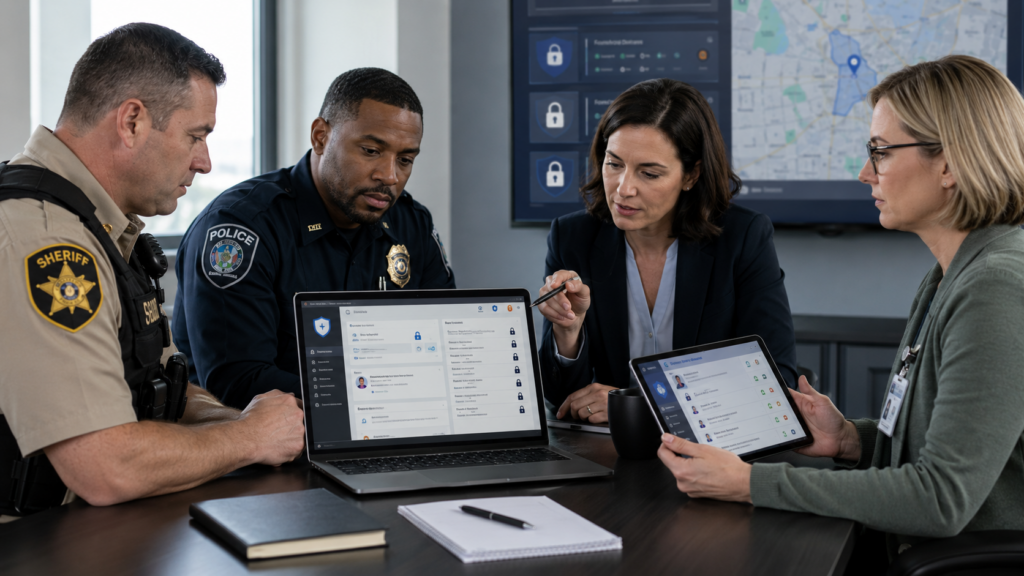
Every agency sees part of the risk.
ECINS helps the partnership see more of the whole picture.
A school may see concerning behavior. A deputy may see repeat calls. Behavioral health may see crisis escalation. A court may see compliance issues. Housing may see instability. Probation may see supervision concerns. Community partners may see warning signs before law enforcement receives the call.
ECINS brings those signals together securely, so agencies can act earlier and coordinate the right response.
ECINS helps law enforcement and community partners coordinate before, during, and after the point of crisis.