


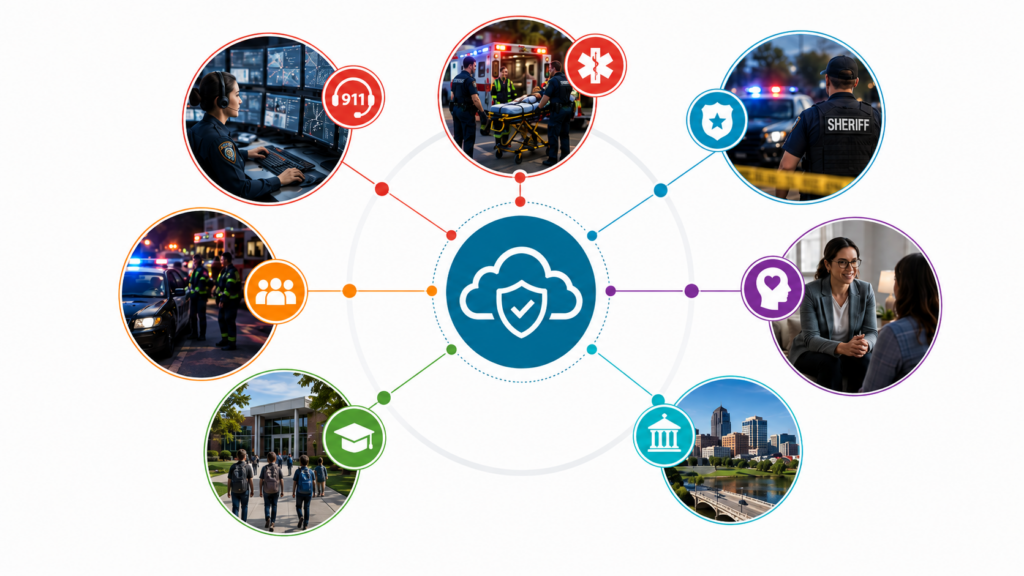
ECINS does not replace CAD, RMS, court, school, or provider systems.
It acts as the collaboration layer across them, helping agencies coordinate when a person, place, risk, or incident crosses organizational boundaries.
Partners can use ECINS to manage:
Many people who create the highest public safety demand are also touching multiple systems at once.
They may be known to patrol, jail, courts, probation, schools, behavioral health, housing, hospitals, outreach teams, and community organizations.
ECINS helps those partners build a protective alliance around the person — combining support, supervision, intervention, enforcement where necessary, and accountability around one coordinated plan.
This is not soft collaboration. It is structured public safety coordination.


ECINS helps agencies move beyond isolated case records.
Partners can connect:
That makes it easier to identify links, understand networks, spot emerging risk, and target resources before problems escalate.
Agencies need to collaborate without losing control of sensitive information.
ECINS supports secure, role-based, auditable sharing so partners can contribute relevant information while maintaining appropriate boundaries.
The right people. The right information. The right time. The right safeguards.
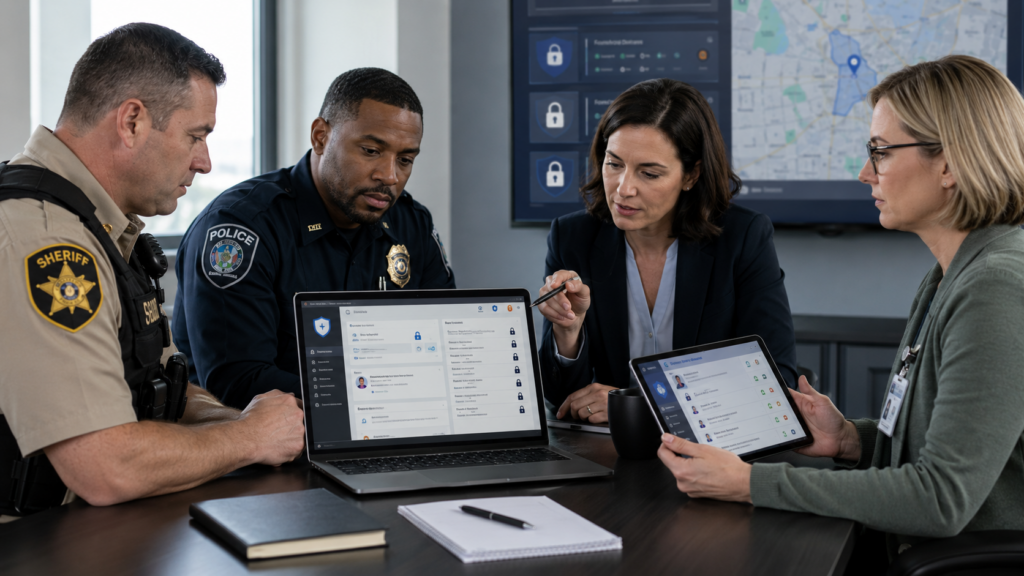
ECINS helps public safety partnerships move from fragmented effort to coordinated action.